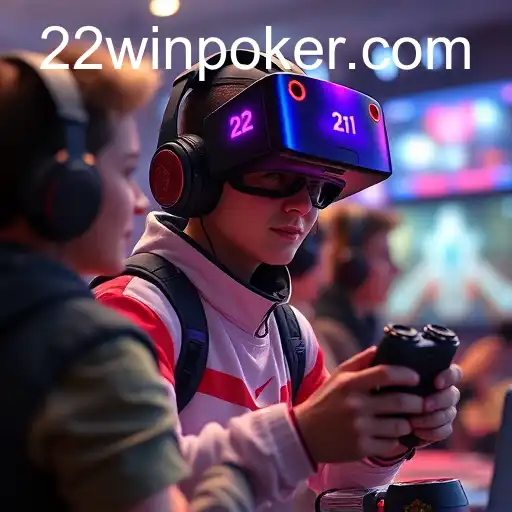
In today's digital age, the way we approach education is undergoing a significant transformation, partly due to the integration of technology in learning processes. One of the most innovative developments in this domain is the rise of educational games, a category that has captured the imagination of educators, parents, and students alike. Among these, '22win' has emerged as a keyword symbolizing a new wave of interactive learning technologies.
Educational games are designed to combine fun and learning, turning the educational experience into something enjoyable and engaging. They cover a wide spectrum of topics and skills, ranging from mathematics and science to history and languages. The primary goal is to motivate students, encouraging them to engage deeply with the content and retain information more effectively.
'22win', as a keyword, signifies a new methodology within these games, promoting a win-win situation where both learning and entertainment go hand in hand. It embodies the essence of interactive learning, where students can enjoy the process as much as they benefit from it educationally. This approach is breaking down traditional barriers associated with learning, making education more accessible and diverse in its application.
These games utilize advanced technology to create immersive environments that appeal to children and young learners. By incorporating elements such as storytelling, challenges, and rewards, '22win' and similar games enhance cognitive abilities, problem-solving skills, and even teamwork when played in groups. This alignment with educational goals makes these games instrumental in facilitating active learning.
Research has shown that educational games can significantly improve learning outcomes. With '22win', students are not merely passive recipients of information; they become active participants in their educational journey. This active engagement helps in better retention of information and develops critical thinking skills.
Educators are increasingly integrating these games into their teaching methodologies. The adaptability of educational games allows for customized learning experiences that cater to individual student needs and learning paces. Consequently, teachers can focus on different skill levels within a single classroom, ensuring that no student is left behind.
The future of education seems poised to embrace these technological advances more widely. As the '22win' phenomenon continues to grow, it signals a broader shift towards interactive and digital learning solutions that align well with modern educational demands. This trend holds the potential not only to revolutionize education but also to democratize learning, making it accessible to a broader audience across the globe.
In conclusion, '22win' and educational games represent more than just a trend; they are indicative of a paradigm shift in how we perceive and approach education. By blurring the lines between play and learning, they create a dynamic, engaging, and effective learning environment that prepares students for the complexities of the modern world.